
The Creative Way: Why Journaling Matters More Than Ever
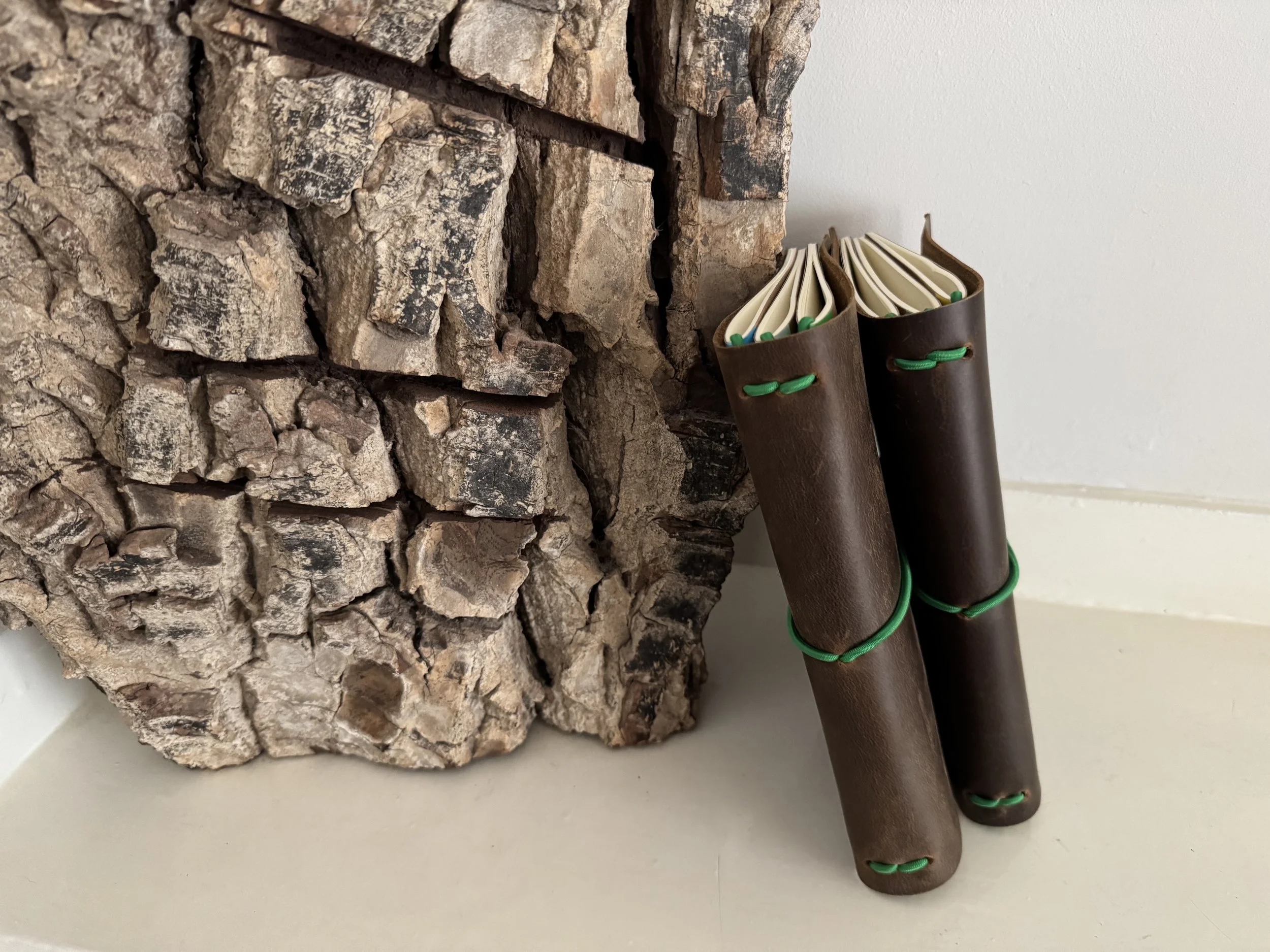
(and why making your own leather journal can transform the practice)
Whatever it is, the way you tell your story online can make all the difference.
Journaling has resurfaced, again, as one of the most reliable ways to navigate uncertainty, clarify intention, and reconnect with creativity. Whether you identify as an artist or simply someone moving through a significant life transition, the act of writing things down offers a structure for inner clarity that thinking alone cannot provide.
Two foundational texts continue to guide this practice for millions: The Artist’s Way by Julia Cameron and The Creative Act by Rick Rubin. Though written decades apart, both books recognise a universal truth, that creativity flourishes when we give our inner world space, rhythm, and language.
Writing as Transformation
Julia Cameron’s Morning Pages, three pages of longhand writing each day, have become a global ritual for clearing the mind and making sense of what sits below conscious thought. Cameron argues that writing externalises the noise, freeing us to recognise patterns, fears, and desires with far more precision. What feels overwhelming internally becomes approachable on the page.
Rick Rubin’s The Creative Act echoes this principle. He frames creativity not as a talent, but as a way of noticing. Writing becomes a tool for attention, an anchor for observing the present moment, capturing intuitive thoughts, and creating a record of the ideas that might otherwise disappear. Rubin reminds us that the act of documentation itself is generative: thought becomes material the moment we write it down.
In both approaches, journaling is not passive reflection. It is a creative intervention, a way of shaping experience, organising emotion, and transforming the internal into something we can hold, witness, and work with.
Why a Handmade Journal Changes the Experience
There is something more fully grounding about writing in a journal you have made with your own hands. The care that goes into cutting the leather, threading the bungee cord, and assembling the notebook inserts creates a vessel for your thoughts that already holds intention.
The Shifting States Leather Journal Pattern, available as a downloadable guide on my website, walks you step-by-step through making your own A5 refillable leather journal. The instructions include all measurements, tools needed, hole placement, and the threading method using bungee cord to create multiple notebook slots—allowing your journal to grow with you.
You can download the pattern and guidance here.
This handcrafted form becomes more than a notebook: it becomes a transitional object, a companion for processing change, and a container for the ongoing narrative of your life.
Journaling Helps You Notice How Far You’ve Come
One of the quiet powers of journaling is the ability to look back. In moments of instability, we often forget our progress. A written record shows the distance travelled, the problems solved, and the resilience quietly built over time. Pages become evidence of your ability to move through challenge, which is invaluable during times of transition.
A Practice for Artists and Non-Artists Alike
Both Cameron and Rubin remind us that everyone is creative. Journaling is not about making art, it is about making sense. It is a practical, accessible method for:
- calming an overwhelmed mind
- clarifying decisions
- developing creative thinking
- witnessing emotional shifts
- holding yourself accountable to ideas and intentions
- expanding awareness of your inner landscape
This is the creative way: a commitment to showing up for yourself on the page.
Begin Your Journaling Ritual
If you’re ready to begin, or return to your writing practice, consider crafting your own journal using the downloadable leather pattern. Allow the making itself to become the first ritual, the first gesture of grounding, the first step in establishing a more intentional relationship with your inner voice.
A handmade journal invites you to slow down, to listen, and to transform passing thoughts into something deliberate, lasting, and deeply your own.
When you commit your story to paper, you claim authorship of your life, not just as a maker, but as a meaning-maker.
