
Brokenness, Repair, and the Art of Living
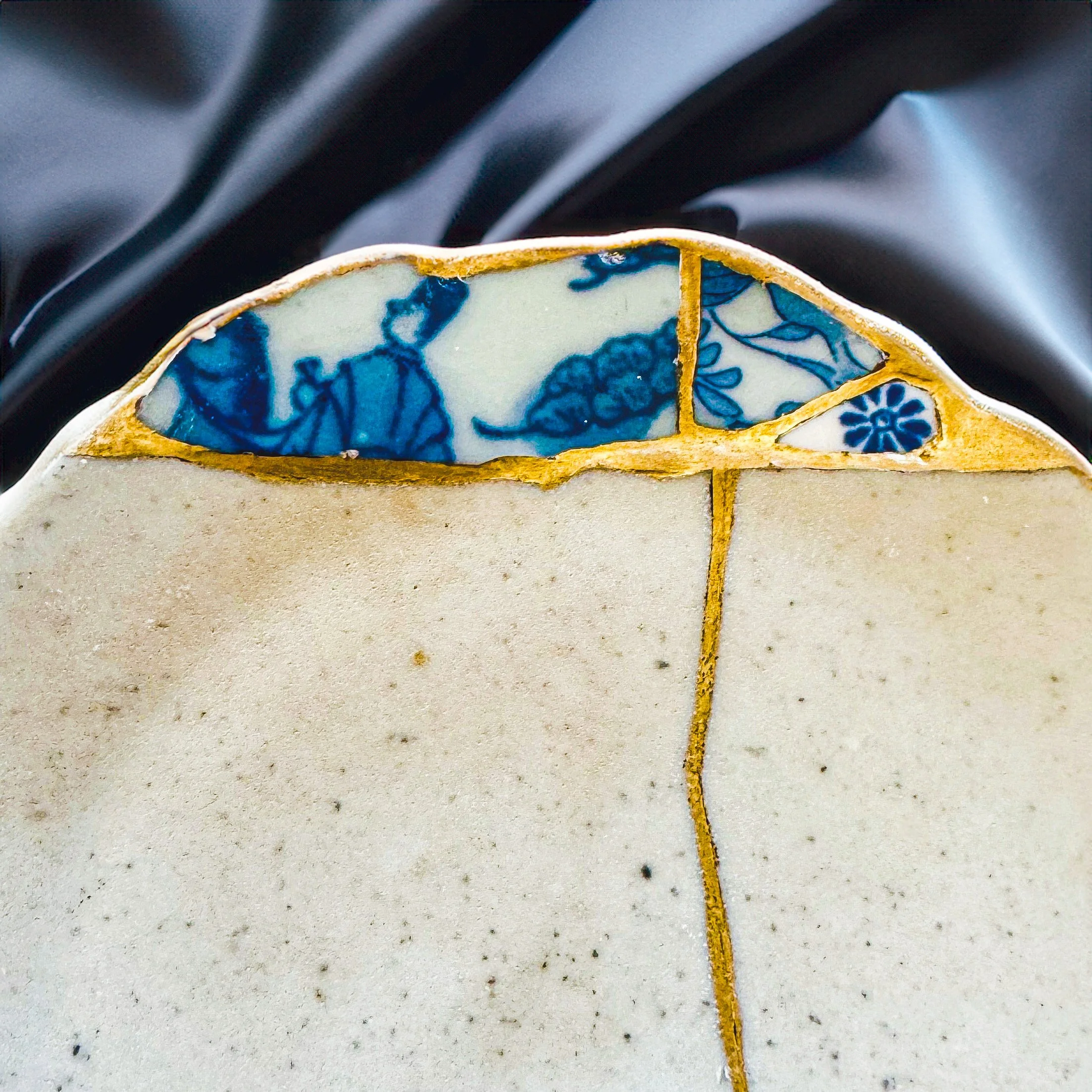
A Conversation with Dr Iza Kavedžija
In December, I had the privilege of sitting down with anthropologist Dr Iza Kavedžija for a conversational podcast on brokenness and repair, following the Brokenness Symposium at Oxford Brookes University earlier this year. From the outset, it was clear that our shared concerns, how people navigate rupture, uncertainty, and transition, and how creative or relational practices guide them back toward meaning, would allow our dialogue to unfold in a way that blurred the boundaries between anthropology and art, theory and lived experience, personal transition, and collective transformation.
As we spoke, our ideas naturally gravitated toward the role of materials in shaping emotional life. In her anthropological work, objects are understood not as inert things but as active participants in the relational world, anchors of meaning, continuity, and care. This perspective resonated with my own use of materials such as nettles, clay, pewter, textile remnants, and bioplastics. Each carries its own history and vulnerability, and when worked with intention, these materials offer a way of grounding experience, externalising emotion, or marking a moment of transition. Within Shifting States, the simple act of making, a talisman, a vessel, a ritual object, becomes its own form of repair, a companion through uncertainty and a reminder of who one is becoming.
Our conversation then shifted toward the quality of attention required to meet rupture honestly. Dr Kavedžija’s writing on attunement emphasises the slow, deliberate orientation that can help people regain direction when the future feels unstable. This deeply parallels the reflective rituals I use in my courses and coaching: slowing the pace, noticing sensations, holding an object, journaling with intention. These small practices create the conditions in which something fractured can begin to reorganise itself.
We also spoke about witnessing as a vital part of repair. To be seen, or to see one’s own pain with clarity, is often the first step toward transformation. In my exhibitions, I invite people to confront the emotional and ethical weight of anonymity, death, and memory; in Shifting States, I hold space for participants to witness their own stories and each other’s transitions. Anthropology, too, relies on this attentive witnessing, often through sustained listening. In art it becomes sensory and embodied, in anthropology relational and observational, yet both modes honour the complexity of what it means to be human.
Repair now feels not only meaningful but essential. In a world marked by social, political, and ecological instability, repair becomes less a discrete act and more an everyday orientation, a way of tending to relationships, communities, histories, and the more-than-human world with care. We spoke about the possibilities that emerge when creative practice and anthropology inform one another: the potential of ritual to support resilience, of material engagement to steady the self, and of small acts of connection to resist fragmentation.
What ultimately emerged was a shared understanding that brokenness is not the opposite of wholeness. It is woven into the ongoing process of becoming, messy, tender, and difficult, yet full of potential. Our conversation reminded me why I am drawn to the work I do. Whether through my doctoral research into identity, memory, and the dignity of the unnamed, or through the rituals of Shifting States, I continue to return to the places where life comes undone, and to the quiet, creative ways people find to repair what might otherwise get lost.
Our dialogue will soon be part of a podcast episode exploring these themes in greater depth, and I look forward to sharing it.
